We are maintaining the original text. The prices, terms, visits, and availability mentioned do not constitute a current offer. Technical estimates require validation of equipment and configuration; market comparisons do not include the original sources.
For a new business, an IP camera is almost always the better choice: it offers higher resolution, a single network cable, and H.265 recording, which saves on storage space. Analog cameras still make sense when there’s already existing coaxial wiring in place and operating, because replacing just the camera is cheaper than re-wiring the entire system.
The question “IP or analog” is still frequently raised when quoting cameras for a business or winery, and the short answer is: it depends on whether you’re starting from scratch or if you already have existing wiring. This guide compares the two options with numbers, not with current trends.
What’s the difference between the two?
The technical differences are noticeable in three things: the type of cable, the image resolution, and the recorder you need.
| Feature | IP camera | Analog camera (HD-CVI / TVI / AHD) |
|---|---|---|
| Cable | One single network cable (Cat6 UTP) provides both image and power (PoE). | Coaxial cable for the image, and a separate cable for power. |
| Typical Resolution 2026 | 4 to 8 megapixels | 2 to 5 megapixels |
| Recorder | NVR (network video recorder) | Digital Video Recorder |
| Encoding | H.265 is more efficient in terms of storage space. | H.264 takes up more disk space for the same quality. |
| Cost of new wiring | More affordable per point: a single cable handles everything. | Similar or even more expensive: two cables per point. |
| When is it advantageous? | New installation or obsolete wiring. | There is already a coaxial system in operation, and only the cameras are being replaced. |
Why does IP win in a new installation?
If you’re starting a new installation, an IP camera is generally cheaper to install: a single network cable handles both image and power (PoE), compared to two separate cables for an analog system. Furthermore, the resolution available with IP cameras today is higher, and the H.265 codec records the same amount of footage in less storage space, which in practice means lower long-term storage costs.
When analog technology still makes sense.
If you already have an analog system in place, with existing coaxial cabling that is in good condition, simply replacing the cameras with a higher-resolution HD-CVI or TVI version often costs less than re-wiring the entire space to switch to IP. This is an exception, not the rule: it makes sense in warehouses and facilities where the cabling is already installed and functioning properly.
The typical case of a winery.
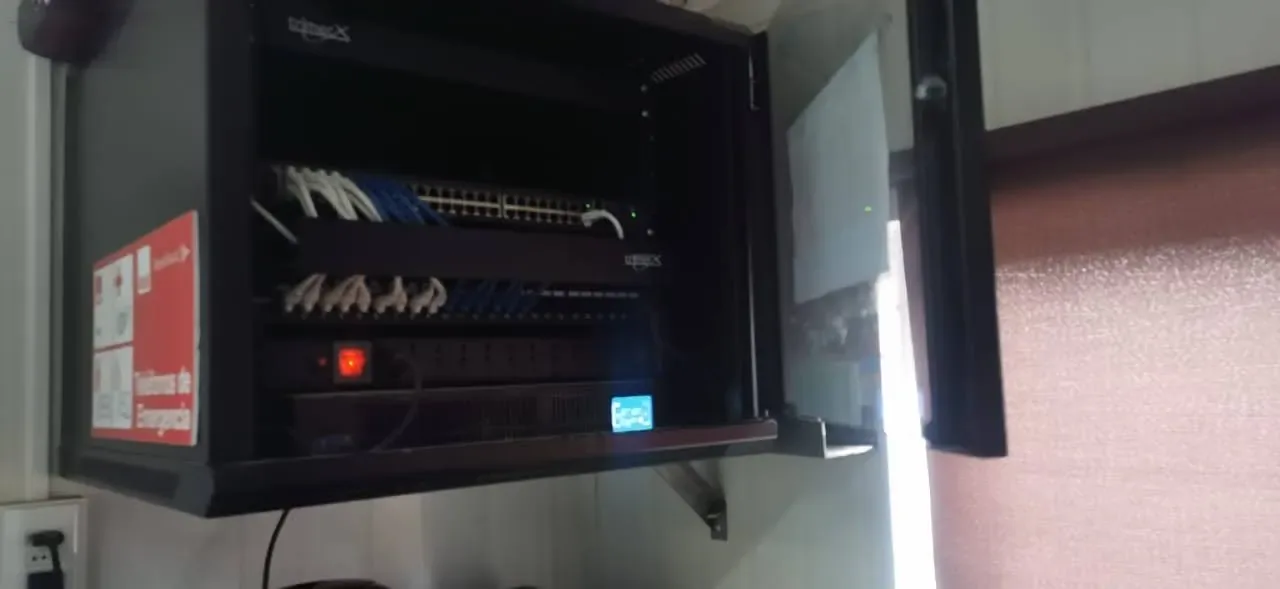
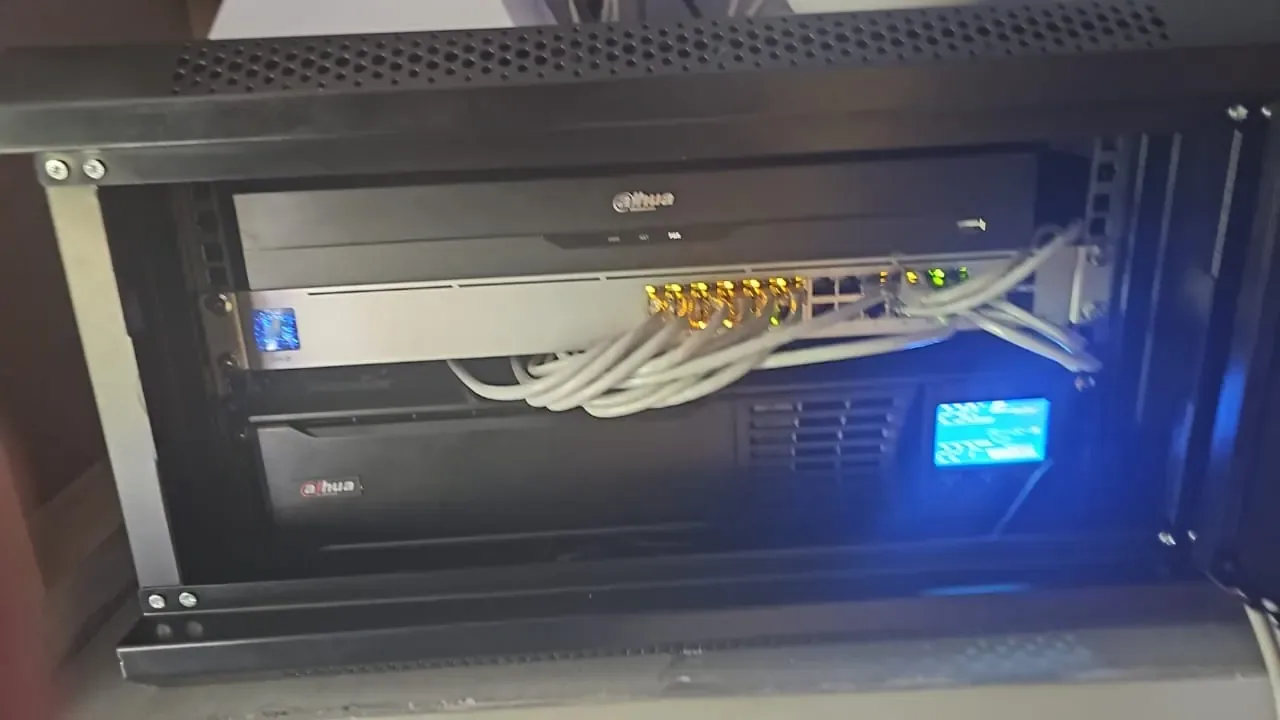
A warehouse with access points, a loading area, and shelving aisles typically requires between 4 and 8 cameras. Using 4MP IP cameras and an NVR with a 2TB hard drive utilizing the H.265 codec, the system provides between 15 and 30 days of recording, depending on how many cameras are set to record continuously. This is the configuration we most frequently install in warehouses in the Magallanes region – it covers access points and the loading area without requiring a huge hard drive.
How much does it cost to migrate from analog to IP?
Transitioning an analog system to IP doesn’t mean replacing everything that’s currently working. If the existing coaxial cabling is in good condition, it can often be used as a guide to run the new network cable along the same route, which reduces labor costs compared to starting from scratch. However, the recorder (switching from a DVR to an NVR) and the cameras are completely replaced. As a reference, a migration of 4 analog cameras to IP with new cabling costs approximately the same as a completely new installation of 4 IP cameras, because the cabling work is equivalent – the real difference lies in whether the existing conduit is reused or if it needs to be opened again.
Common mistakes when integrating technologies
Two errors are repeating in facilities that grew incrementally, adding cameras over time.
- To buy a hybrid recorder “just in case.” A hybrid DVR that accepts both IP and analog cameras is generally more expensive than a dedicated one, and in practice, it almost always ends up being used for just one type of camera. If you’re going to choose a path, it’s best to go directly with an NVR.
- Adding cameras with different resolutions to the same recorder. The NVR should record at the highest resolution it can handle; mixing a 2MP camera with an 8MP camera within the same system doesn’t save on storage – it only complicates the setup.
What to look at before making a decision.
- Is there existing coaxial cabling that is already installed and in good condition? If so, perform an analog evaluation before rewiring.
- Is the space new, or is it currently being renovated? There, the IP (likely referring to “Intellectual Property”) almost always wins out in terms of overall cost.
- How long do you want the system to last? The resolution available on IP is increasing at a faster rate than on analog systems.
- Are you interested in a serious, remote monitoring solution? Both of these options do, but configuring via IP is generally more direct.
Our recommendation
At Ditap Seguridad, we install… IP cameras As a standard for new installations, with certified wiring and an NVR included in the package. If you already have an analog system and simply want to assess whether it’s worth migrating or maintaining, we’ll review it at no cost during the technical visit before recommending any changes.
September 2026 editorial archive. The figures are historical references, not current prices or service commitments. Please refer to a proposal tailored to your location.
Frequently Asked Questions
Can I combine IP and analog cameras in the same system?
Not on the same recorder. The NVR is for IP cameras, and the DVR is for analog cameras; there are hybrid systems, but it’s best to define a single path before purchasing.
Does the IP camera require more internet bandwidth?
Do not record: the recording goes directly to the NVR, on the same local network. Internet is only used when you view the camera from your phone outside of the premises.
How long does each one last?
Both technologies are expected to function reliably for between 5 and 8 years, provided they are properly maintained. The key difference now lies in the resolution available today, rather than in their lifespan.